Reflections
When I reflect on the friendships I have made and how I’ve made them, the quote, “Ironically, the people you meet by accident are often the ones who become an important part of your life.” comes to mind. I am guessing that probably has also rung true in your life, just as it did in Paul Zindel’s The Pigman and just as it has in mine.
The Book
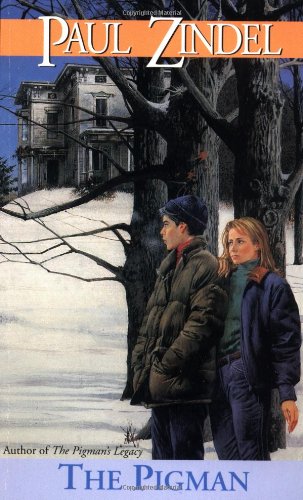
In Paul Zindel’s The Pigman, John, Lorraine and Mr. Pignati were destined to meet and develop a friendship. Had Lorraine not been pressured to make a prank phone call of a randomly picked number in the telephone book. The decision to accept the invitation to come over to his (Mr. Pignati’s) house resulted in a friendship that was important to each character. Chances are everyone you know has accidentally met someone who has become an important person in their life. Two of the people I expectantly and accidentally met became my best friends.
My Backstory and My Personal Connections
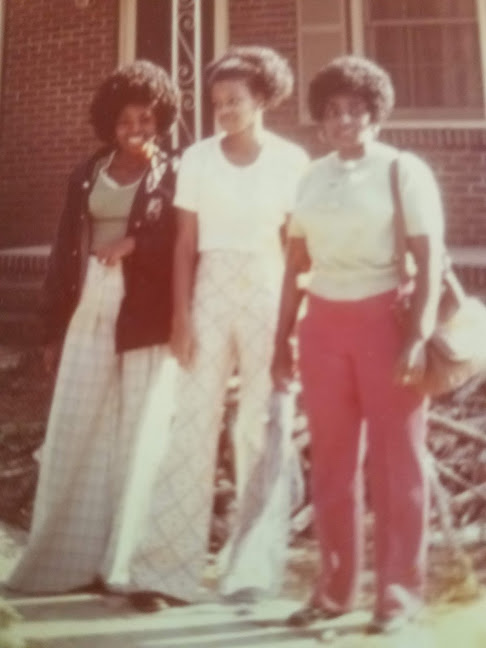
My high school best friend and I became friends after our mothers met at a parent meeting and decided that we needed to meet and become friends. I lived in inner city Boston and she in suburban Boston. Promising our mothers we would make a conscientious effort to meet and introduced ourselves, we did. Our planned meeting turned into a friendship that led to us staying at each others’ homes regularly, spending vacations together, going to college together, being in each others wedding, attending a parent’s funeral. In high school we were inseparable. In college, we discovered that although I practically lived at her house in high school, we were better friends when we didn’t room together. Her family was mine and mine, hers. Her mom became my godmother and my children’s “Kah.”
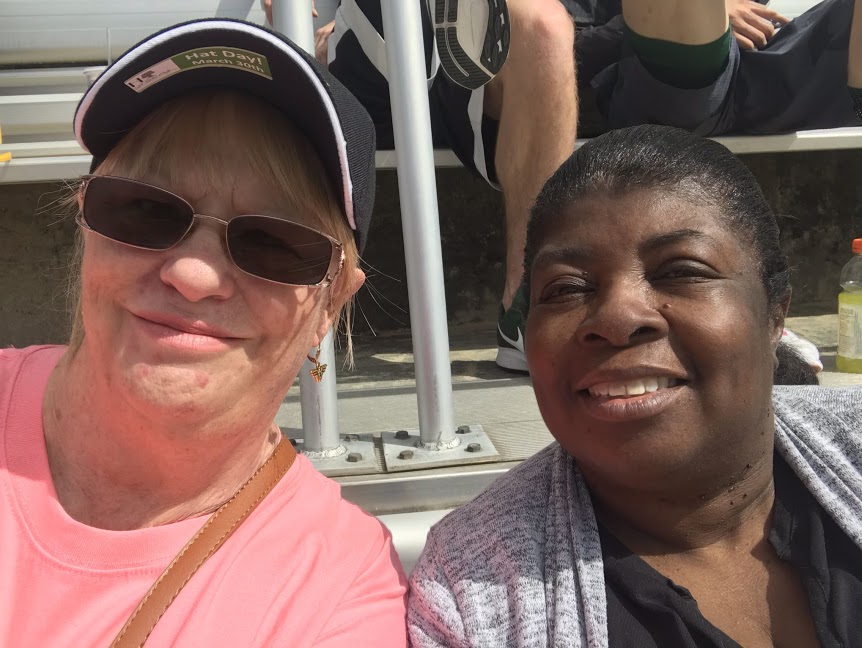
I met Terri at my apartment complex. I was coming downstairs and noticed her opening her door on the landing floor; she was wearing a spirit button for a high school football team at the school where she taught. Ironically, we had not met and I, also, taught at the school. A week later, my car broke down and I needed a ride. We began riding together. Ten years later, she became the godmother of my children. We have now been friends for over 30 years. She is family and will always be Aunt Terri to my 23 and 25 year old children
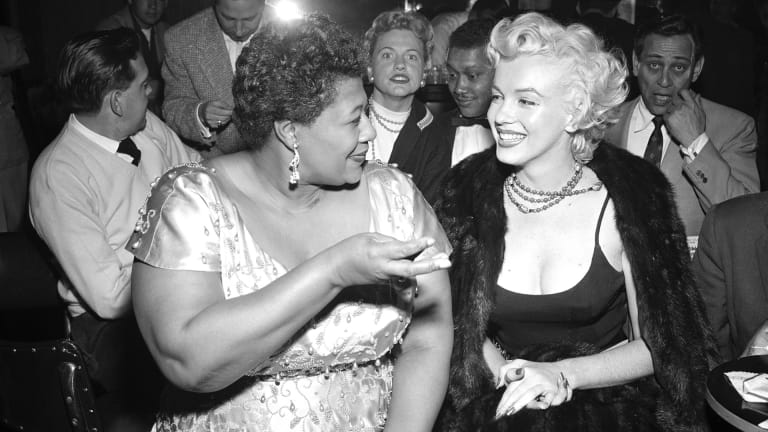
Another example of unexpected friendship is the friendship between Ella Fitzgerald and Marilyn Monroe. Monroe, a fan of Fitzgerald, was disappointed when big clubs would not allow Ella and her band to play at their venues because of the color of their skin. She made it her mission to change those practices. She called around until she convinced big venue organizers to permit Ella and her band to play at their venues, promising that she would be their every night they were booked. Several said no, fearing they would anger the patrons; but a few hesitantly agreed. The rest is history. Just as Marilyn helped Ella, it is because of Ella that Marilyn began to sing. Ella mentored her. Until their deaths, they became very good friends.
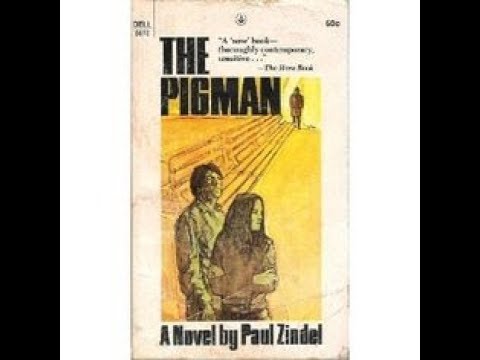
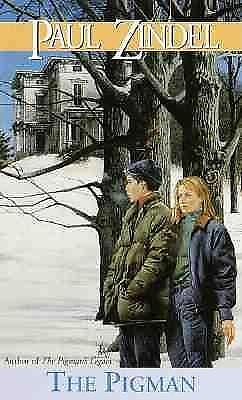
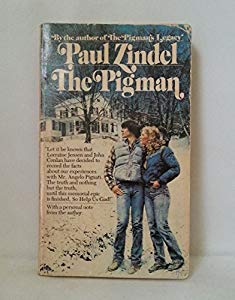
“Ironically, the people you meet by accident are often the ones who become an important part of your life.”
https://quotebook.in/post/119265144650/ironically-the-people-you-meet-by-accident-are?ref=weheartit
I first read The Pigman when I was a first year teacher. Hired to teach Spanish, I also taught two classes of Language Arts. It was a year of many firsts including my first time teaching my own class, my first time reading the book (ten years after it was first published), and my first time teaching language arts to high school students. We finished the book and sadly I don’t remember much about the book or any impact it may have had on learning. tell you anything about it. I think there were some discussions and a lot of handouts, quizzes and tests. As far as I can remember there was little to none, active learning, student engagement or connections.
Fast-forward to 30 plus years later when I had evolved into more of the teacher I wanted to become. Not only had I changed, so had the cover of Paul Zindel’s The Pigman…many times. I no longer was a classroom teacher, having since become a curriculum coordinator who also taught a few classes. But as change is inevitable, the superintendent who hired me retired from his position to take a dream job. What was to that point, my dream job came to an end with the appointment of the new superintendent; my dreams did not.
After a career teaching Spanish at a PK-8 Montessori school while completing my leadership and supervision certification program, I accepted a position as an Assistant Principal at a high school in a neighboring school district. As an Asst Principal, I had many responsibilities included, but not limited to teacher supervision, student discipline, teacher recruitment, and curriculum and instruction. In July 1995, prior to accepting the high school position,Governor Zell Miller appointed me, as the P-12 school representative, to the Georgia P-16 Education Council. One of the results from our work was the mandate for administrators to teach at least a few hours a year. I apologize that I can’t remember the actual number as I, by choice, always exceeded the requirement. I made the suggestion to the Committee because I sincerely felt (and still feel) that staying connected to the classroom is essential to good leadership. The recommendation went on to become a state mandate. Most teachers loved the requirement; many administrators did not, seeing it as something else for which they needed to make time.
Connecting the Book and the Reader
Believing in the initiative and set on practicing what I believed, I, as a high school Assistant Principal volunteered to stand in to teach a lesson on the The Pigman for a teacher who had a late afternoon appointment. That 62 minute lesson evolved into 3 1/2-4 week commitment. I volunteered for this particular class because the teacher had regularly come to me for advice about reaching kids in that class. To say the less, the class was not one of her favorites. In fact, she dreaded having to teach the class. She always left feeling drained. discouraged and feeling ineffective. Upon arriving to the class, I better understood the challenge. They had not begun the book yet and had been assigned a few chapters the night before. Needless to say, not even two had taken the time to read those chapters; I was among the two who had. Yes, another student and I were the only ones out of 27-28 students. Noticeably, the students were surprised to see me, an administrator, standing in the front of the room. They were accustomed to us coming in to observe and assess the teacher, but to see me at the front ready to teach was new and probably intriguing for some.
Because the students were not prepared to follow the lesson plan the teacher had given me, I had to improvise. I decided to do a little forecasting, asking them to share what they thought the book was about, based on the cover and the title. Once that task was completed, we began reading the book. To begin I called a student who I knew from his “special visits” to my office, I thought he might relate. Reluctantly, he began reading the words of the first chapter:
”I hate school, but then again most of the time I hate everything.’
Needless to say, as the student continued to read, he was becoming increasingly interested in the chapter, as were some of his classmates. I could tell they were relating to the unnamed narrator. At the point in the story, I polled the class on how they felt about school, instructing them to stand up or raise their hands if the statement best represented their feelings.
- I love school.
- I like school.
- I tolerate school.
- I dislike school.
- I hate school.
I then asked all those who liked or loved school to get up and meet together. I did the same for those who indicated they tolerated or were indifference about school. Those who disliked or hated school were instructed to group. I asked them to select someone to take notes and present their findings to the class. Once that was completed, I gave them 10 minutes to talk about why they answered as they did and to come to consensus on which 3-5 responses they would share with the class. The presentations went well. I then told them that for homework, I wanted them to 1) finished reading chapter 1; start a The Pigman journal and to begin by reflecting on what they as “likers” and lovers of school could do to help someone like school more or if they were among those who disliked or hated school, what could be done to improve their feelings about school; and 3) be ready to focus on the narrator’s “story” as well as their own. After all, we all have one.
Most seemed to be intrigued with where I was taking them. I tell myself that they felt the engagement and were opened to the opportunity to connect. What they weren’t seeing as where was this going to go. One student asked what would happened to their assignments, “if we decide to do them.” Another wanted to know if they were going to be graded.” I assured them that if they brought them to my office, I would read each one. They accepted the invitation, but I could tell they were still not ready to commit to the possibilities. The next day, I stopped by the class to check on them and to collect journals that had been completed. They seemed glad to see me. One asked what was the next journal assignment, I told them if they wanted to, I invited them to think (and write) about themselves as a troublemaker or about a troublemaker they know, analyzing why troublemakers make trouble…and of course continue to read the book.
After class, the teacher came to my office to discuss her class. She said the kids had shown more interest in reading and excitement about learning then she could remember. She noted, that the students wanted to know if I could come back and teach. At the end, she asked I would consider periodically teaching a few more lessons, maybe even the next week or perhaps the entire unit on the book. Crazy me, I decided to take on the challenge.

Deciding to teach the class was easy; preparing to teach it with less than a two-day window, was a little more challenging. But my greatest challenge was how to engage the students; how to keep the students interested; and how to make learning relevant. I didn’t want to just teach the unit, I wanted to inspire the students.
. . . The Pigman probably is successful now because it triggers discussions with kids about problems that are very important to them. I think that’s just the way that books work and what’s behind all authors writing books, whether they know it or not.
—Paul Zindel, A Message from the Author (
file:///C:/Users/Trey%20Williams/Downloads/pigman_study_guide%20(1).pdf )
The great thing about The Pigman, is that it is a theme-rich novel. It is filled with teen related topics that was relevant in 1968 when it was written, in the 90’s and are still relevant. This story is about the relationship between the three main characters, John, Lorraine and Mr. Pignati. John and Lorraine, two troubled teenagers, prank call Mr. Pignati, an elderly, lonely, kind, and trusting widower. After he volunteers to donate $10 to the charity that really didn’t exist, they go to his house and end up becoming friends with him. A lot about life and relationship is unveiled during the time of their relationship. As I pondered how I would proceed, the one thing I knew was that I had to be flexible in my ability to transition from the traditional boundaries on the inside of the box to the infinite opportunities outside of the box. I had to strive to inspire the students during those last 62 minutes of the day. I spent that weekend finishing the book, rereading chapters, designing pre-reading activities that could help hook them to the book, and determining how to connect the themes of family, peer pressure, first impressions, trust, parenting, friendship, relationships matter, mortality, accountability, love, consequences, growing up, denial, holding on, life’s disappointments, loss and death to student learning.
I brainstormed ways to actively engage the students in the learning process while also making connections to the book and to the world outside of the classroom. I knew that to make learning relevant and meaningful, I had to figure out how to engage students in traditional, as well as not so traditional activities. I had to design lessons that were relevant…lessons that could connect the themes of the story to the students’ lives, experiences and interests. My mission create and facilitate episodic, multi-sensory, multidisciplinary learning opportunities.
In addition to traditional activities like character analysis, word walls, vocabulary quizzes, reports, essays, Socratic inquires, choral reading, and reading circles, the following are a few strategies and assignments that I integrated into the lesson help me engage students and connect learning.
- Students acted out book scenes
- Students selected chapters to retell to younger readers for better understanding
- students maintained a reflective/dialogue journal where they wrote daily on the book, characters and/or one or more themes. Sometimes they shared with the class. Some entries were free writing, others were prompts I gave to them.
- Personal, family and friends’ nicknames.
To connect the book to the world outside the classroom and to provide real-world based experiences…
- Once the pig collection was introduced to the students, I shared several examples of collections including:
- my daughter’s ceramic dolls,
- my son’s collection of Zoids…a collection he still has; now he collects comic books, Aquaman action figures, and graphic novels,
- my best friend’s turtle collection to which I still contribute with turtles from different states and countries,
- the collection of pigs of the office manager at one of my previous schools,
- my collections of Don Quijote and Native American art.
- We talked about different kinds of collections and why people had collections. Students were encouraged to share a “show and tell” of their personal collections and their sentimental reasons. If they didn’t have a collection, they could share those of a person they knew.
- We used technology to experience real time traffic in Manhattan and discussed the experience. Webcams and Live Traffic cameras are available with an internet search. Seeing the actual hustle and bustle of downtown Manhattan was surprising to the students.
- To understand the referral to the Solomon R. Guggenheim, I showed students images of the Guggenheim. This is easily found through an internet search.
- We went on a virtual visit of the Guggenheim to connect with an experiences in the book. Students were able to move through the museum while simulating an experience. Although these students lived in a semi-rural Georgia town not far from Atlanta, it was a surprise to learned that some had never been to big city….not even Atlanta.
- I arranged a field trip to a nursing home with each student assigned a resident. Together as a class, they created common questions that had to be asked of the resident. They gathered info about the individuals, interviewed them on themes and concepts discussed in book…from parents to friendships to collectibles and hobbies to struggles and successes. They learned what they asked and so much more. Their newly unveiled friends did not hesitate to share. It was like some were thirsty for the love, friendship and attention. Afterwards, the students wrote letters to their new friends, created and presented PowerPoint presentations that were shared. Some even shared with the residents and if around, families. They wrote stories/prose/poems/articles that were compiled into a class booklet. After the experience, some kids kept in touch and continued to visit their new friends. One student had a grandparent who had lived in the home for years and he had never visited. Before we left he asked to go visit. I held the bus (which was already late in returning because students were so engaged in the assignment, they didn’t want to leave), so he could. He came back glowing and excited. I can’t even imagine what the grandparent was feeling. According to the personnel of the nursing home, that student became one of her most regular visitors. BTW, he did two presentations. This is an important note because he was one of the students who had formerly lacked motivation, hated reading, rarely turned on assignments and who had preferred to either sleep or disrupt class.
Additional Engagement Ideas:
- Have students work in groups of three or four. Each group will brainstorms characteristics of a good friend. One person from each group will read their list to a class recorder who will in turn compile the lists on post-it charts (or the board if you don’t have chart paper). This latter action will eliminate duplicate posts. Students will walk around looking at the charts and using stickers, vote on the five characteristics they feel are most important in a friend.
- A book scavenger hunt is a great activity to help summarize the book. it can be a hunt for:
- answers to quotes
- answers to questions
- characteristics
- answers to questions
- identification of idioms, metaphors, allegory, irony, similes, symbolism, etc.
- Ask students to pretend to be one of the book’s characters and write a letter to someone who evokes feelings in you. Some ideas are:
- John to Lorraine
- Lorraine to John
- John and/or Lorraine to Mr. Pignati when he was in hospital
- Apology to Mr. Pignati after destruction of house
- John and/or Lorraine to parents
- John to teacher or parent
- Mr. Pignati to his dearly departed Conchetta
- John to his younger self
- Create a mock zoo with stuff animals and/or pictures. Before students enter room, leave instructions on the wall, door or an easel. Make sure each group gets a different color stack of post-its. Divide students into groups and ask them to rotate to each stations (zebra, gorilla, monkeys, peacocks, sea-lions, vultures, snakes, alligators, tortoises, pythons, puff adders, baboons, owls, pottos, bats and any other animal mentioned at Baron Park Zoo. Students will visit each animal area and discuss and the relationship of the animals to the book’s characters. Using the post-its, each group will post their relationship responses on the nearby wall, board, door, wall, or whatever else you decide will be the posting area.
- Discuss the nicknames in the book, “Marshmallow Kid,” “The Pigman,” “The Bathroom Bomber,” and others. Discuss how people get nicknames. Create a list of nicknames that classmates, family members, celebrities, and musicians have.
More Connections:
- Students can become engaged through the connection of the timing of the book. Consider having a book launching party to introduce the book; plan a 60’s day. Students can dress up in the fashions of the 60s, play music of the 60’s, especially of 1968 (https://en.wikipedia.org/wiki/Billboard_Year-End_Hot_100_singles_of_1968) when book (. Invite older community members/parents in to teach some of the dances (The Twist, The Mashed Potato, The Watusi, The Frug, The Shimmy, The Loco-motion, and the Hitch Hiker, to name a few). Hold dance contests. Homemade medals work so do little trophies from www.orientaltrading.com or Party City.
- As I noted at the beginning of this post, since it was published in 1968, there have been dozens of covers/book jackets for The Pigman. Have students work alone or in pairs to create a new cover/book jacket for The Pigman. Allow them to use any available media: drawing or painting, charcoal, colored pencils, chalk, mixed media, magazine pictures, markers, computers-generated images or texts, fiber collages, paper creations, decoupage, embossing, or any other source that will result in a cover that can be duplicated. Share the back covers of some books with them so that they are familiar with the components that may be on it. Encourage them to be creative. Consider making it a competition. Once finished, submit pictures of the covers to the company that publishes The Pigman.
- Set up computer centers where students can go on virtual tours of New York. ://www.youvisit.com/tour/nyc?pl=wa After a little research, they can develop a brochure for the place they most likely would visit. This will allow them to develoop a plan. Arrange for the best, most accurate brochures to be displayed at a travel agency, library or retirement center.
- Guggenheim Museum Interior Streetview: https://artsandculture.google.com/asset/solomon-r-guggenheim-museum-interior-streetview/jAHfbv3JGM2KaQ?hl=en
- Encourage students to read one or both sequels to the book
- The Pigman’s Legacy (1980)
- The Pigman and Me (Zendel’s autobiography, 1990)
- Ask students to brainstorm more positive and service-oriented reasons to have a telephone marathon. If possible, execute a plan that makes it a reality.
- Have students work in groups of 3-5 to create a newspaper using The Pigman as the focus. Determine which sections will be mandatory (I suggest a certain number of required sections and a minimum number of additional sections:
- Local/domestic/national news
- International news
- Business/finance/economy
- Obituaries
- Politics
- Sports
- Weather
- Police/Crime
- Classified ads
- Interviews
- Letters from the readers
- Opinion/editorial
- Entertainment/comics/crossword puzzle/movies/horoscopes
- Arts, culture, literature
- Events/movies
- Broadcast/cable television guide
- Society/people – includes weddings
- Tourism/travel tips
- Computers
- Automobiles
- Style/fashion
- Cooking/cuisine
- Health/medicine
- Comics
- Quotes
- Home & decoration
- Family
- Kids/youth
- Magazines and other supplements
- Copy the newspaper and distribute to other students in other classes. I love using this type of project as a unit assessment especially if you have set it up to include what was required by the standards. It can be assigned on the first day of the unit and turned in either the last day of the unit or 1-2 weeks after the completion of the unit This will go beyond testing; it is assessment. It goes beyond recalling and listing; it demonstrates higher order thinking skills, application of knowledge, creativity, and life-skills.
- Have students work in groups of 3-5 to create a magazine using The Pigman as the focus. Topics may include chatter/gossip, mail/advice, buzz/scoop, fashion and style, ads, character sightings, beauty tips, food, and more.
- Thanks to classtools.net, students can complete a Fakebook page for the characters. Examples:
- Have students work individually, in pairs or in groups to use the letters of the alphabet to create and illustrate a “The Pigman ABC book.” Make sure you request components you want to access (i.e. something that represents symbolism, simile, metaphor, theme, etc.) For example…
- A could be for Alligator Pool, Avocation, Allegory
- B could be for Bobo, Baron Park Zoo, Bathroom Bomber, Baboon, Berdeen’s Funeral Parlor, Blame
- C for Cemetery. Ceramic Pig Collection, Collection,
- D for Death, Damage, Dennis..
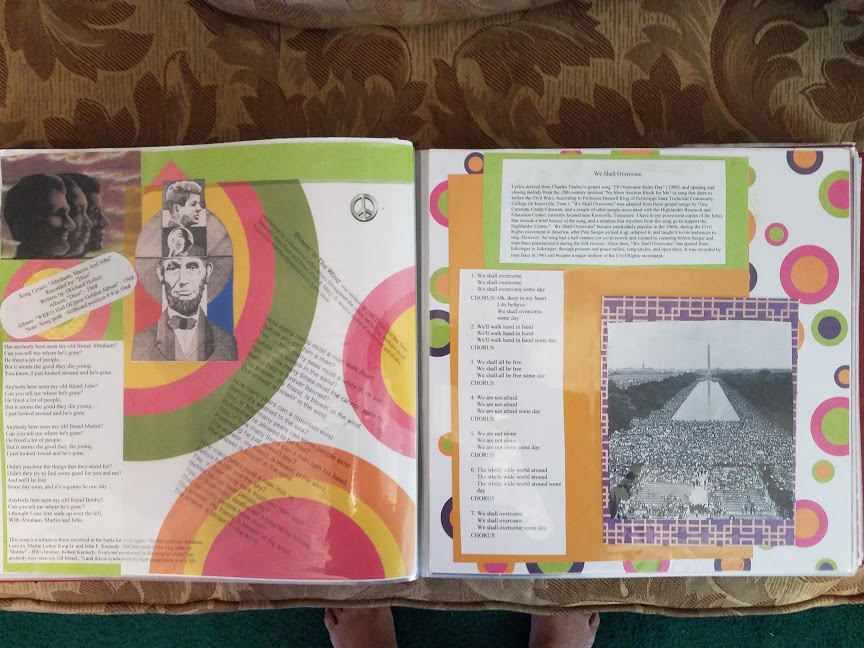
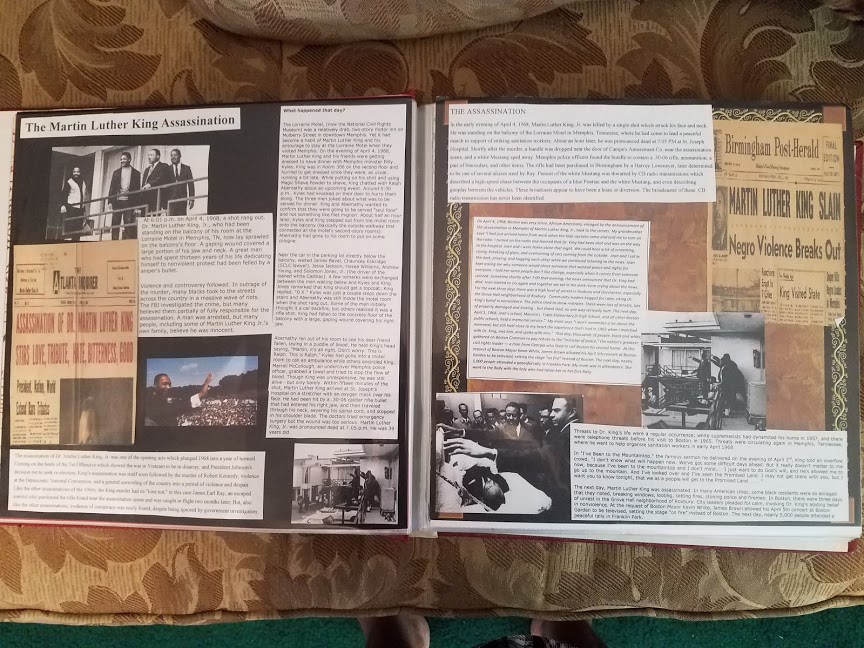
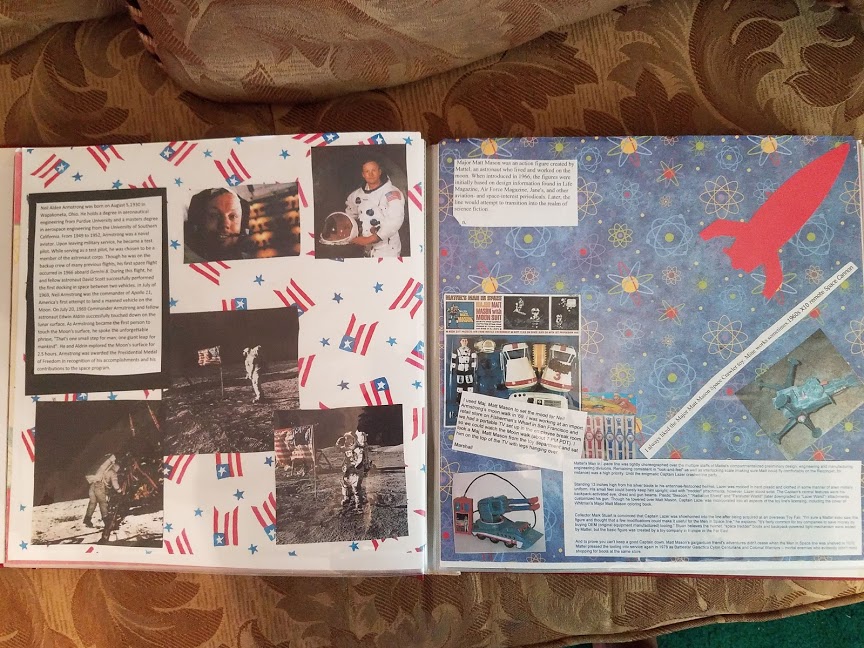
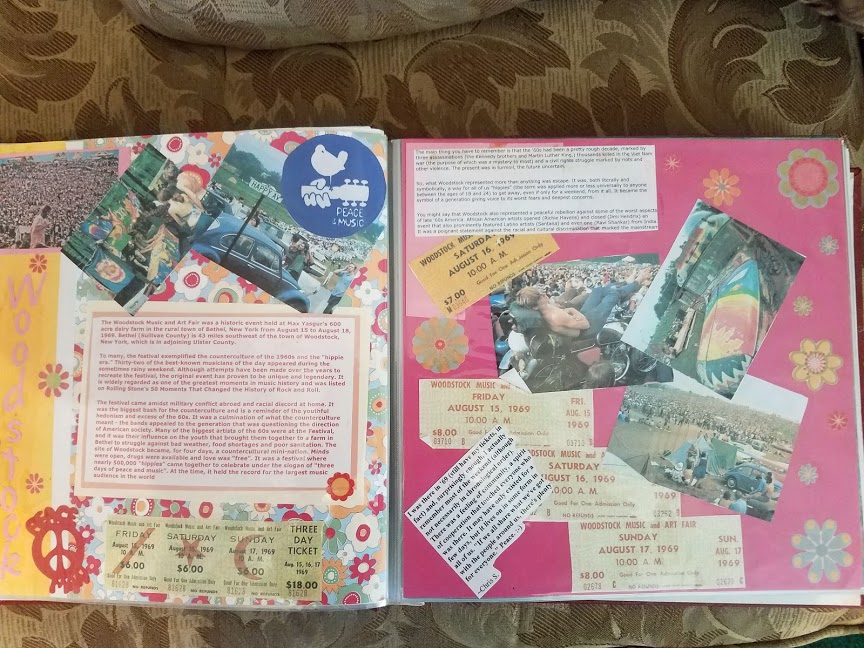
- Have students create a scrapbook or scrapbook pages based on one or more characters, the time period of the book/setting (see images below of scrapbook pages done by a high school boy), a chapter or the complete novel. Depending on which you assign and if you assign as individual assignment or group project, you may want limit the number of pages they are required to complete.
“We test students right after they read something mostly to ensure that they have in fact read it. From this, many have drawn the erroneous conclusion that the only good that can be extracted from their reading is that which can be displayed on or measured by a test. This is wildly inaccurate. Most of the good your reading and education has done for you is not something you can recall at all.“
Douglas Wilson, Wordsmithy: Hot Tips for the Writing Life




OMG!!!! This blog is incredible!!! I got so excited just reading “The Pigman” article that I can’t wait to read more!! It took me back to the days when we were part of an organization that practiced teaching “outside the box”. I love all the examples and suggestions. I even took notes and will definitely incorporate some in my classes, next year!!
You’ve started a great thing, here. I plan to share your blog with colleagues and hope you will continue to share your wonderful ideas!!
Thanks for getting me excited about teaching, again. So glad you’re writing this!!
Thank you for your kind responses. I haven’t figured out how to have readers subscribe yet, but I will definitely make sure to notify you via email when I have new posts. You can also follow me through Facebook and Pinterest. Search for Literarily My Way. Again, thank you for your support, comments and inspiration.
Hi Jean,
I love your blog! So cute and informative, with a great flow to it. Thank you for all you have done in educating our youth. Reading and learning from it is so important in life!
Thank you for taking the time to read my post and for your comments. It has been my pleasure to educate our youth in and out of the classrooms and schools. I still am honored to have the honor to work with teachers and students in facilitating the success of students.
Thank you so much for your comments. If you haven’t had chance to check out the blogs lately, a few new ones are posted. The latest are a travel-lie blog: https://literarilymyway.com/alice-in-wonderland-revisited-at-the-atlanta-botanical-garden/ and a revised posting, now designed as a tribute to a friend we just lost to MSA-P at https://literarilymyway.com/todays-a-good-day/ Hope you enjoy!
I have never even heard of this book before and now I want to read it.
I absolutely love how relatable you made this book. And all of the creative activities to keep your students engaged and motivated. It is not often that this happens.
I certainly remember my teachers that taught in such a manner and am grateful for what they did for me.
I am certain these students feel the same way about you.
Thank you for o taking the time to read the posts and for your comments. I am preparing to read the sequels this year. Not only was it an effective technique and strategies but also worked well for my children. My daughter, the gifted over achiever, was able to extend her learning experiences while my son the gifted/ADHD reluctant reader was (and still is) was able to be engaged in the learning process and could use his skills to stay motivated.
First I want to say, I’m super proud of you and I’m excited I can finally subscribe to your blog!
Next, I have never heard of this book until this post, thank you so much for the information as well as the resources. Our son is an avid reader as well so I think this will be a great summer read at home for him. I’ll come back to share how everything went.
Finally, that quote: “Ironically, the people you meet by accident are often the ones who become an important part of your life.”
Speaks volumes to me, as that resembles how three of my close relationships started with my husband, best friend and recent friendship with a purpose!
Thank you for your transparency and Knowledge! Bless you
Thank you. I have to admit that although early in this process, I am proud of how much I’ve learned and blessed by the people I am meeting along the way. Like the title of this blog, I am meeting lots of unexpected friends. I look forward to sharing more blogs. Several drafts already in the making; took a little detour to take this course and learn how to use WordPress and Constant Contact. No regrets! I’ve learned so much. New posts coming next week. Thank you again for your vote of confidence, for subscribing and for reading the blog.
We stumbled over here coming from a different page and thought I may
as well check things out. I like what I see so now i’m
following you. Look forward to going over your web page yet again.
Glad you stumbled over. Thanks for not redirecting once you realized you were on an unplanned visit. It makes me happy that you liked what you have seen so far More to come this month. Have a great day!
This page definitely has all the information and facts I needed about this subject and didn’t know who to ask.
I am glad you found what you were looking for.
I’ve been browsing on-line more than 3 hours today, yet I by no means
found any fascinating article like yours. It’s beautiful value enough for me.
Personally, if all web owners and bloggers made excellent content as you probably did, the net
can be much more helpful than ever before.
Thank you for your comments. May you continue to find what you are looking for on your web surfing journal.
Very nice article, exactly what I was looking for.
Thank you for stopping by and reading it. With the shelter-in-place restrictions, these friendships ,au help us to cope with the unstable world outside of our doors.
Hi, this weekend is fastidious in favor of me, because this
occasion i am reading this fantastic informative
article here at my residence.
With the impact that COVID-19 is having on our lives and world I understand your fastidiousness in trying to remain healthy and safe. I am sad it is what brought you to my posting but am happy that you found my posts. I hope you continue to enjoy it.
Thanks for any other informative site. The place else could
I am getting that kind of information written in such a perfect means?
I have a project that I’m just now operating on, and I’ve been on the glance
out for such info.
I am glad the site was informative for you. Hope you are able to visit the site one day.
Hurrah! In the end I got a web site from where I be capable of truly take useful data regarding my
study and knowledge.
Glad you found something useful on the site.
Its like you read my mind! You appear to know so much about this, like you wrote the book in it
or something. I think that you could do with some pics
to drive the message home a bit, but other than that, this is fantastic blog.
An excellent read. I’ll certainly be back.
Thank you. For that story, I used all the pics I currently have. Other blog posts have more. Thanks for checking it out!
What’s up, I would like to subscribe for this weblog to obtain newest
updates, therefore where can i do it please assist.
You can subscribe at http://www.literarilymyway.com or at https://literarilymyway.com/engage-in-and-connect-with-our-reading-community/ You can also subscribe on facebook page https://www.facebook.com/literarilymyway
Helpful info. Lucky me I discovered your web site accidentally, and I am shocked
why this coincidence didn’t happened earlier! I bookmarked it.
Glad you are enjoying it no matter how you found it. Thanks for your commment.
I used to be recommended this web site by way of my cousin. I
am no longer certain whether or not this submit is written by means of him as no one else know such detailed approximately my problem.
You’re amazing! Thanks!
Thank you. All blogs are written by me. I appreciate your comments.
I’m curious to find out what blog system you happen to be utilizing?
I’m having some small security issues with my latest website and I’d like to find something more secure.
Do you have any suggestions?
I know someone using wordpress, reddix, blogspot and google. Have heard good things about all.
I would like to thank you for the efforts you have put in writing
this site. I really hope to view the same high-grade blog posts
from you in the future as well. In fact, your creative writing abilities has inspired me to get my own blog now
😉
Thank you for your comments. Good luck with your blog.
Can you tell us more about this? I’d love to find out some additional information.
Hi, not sure what you want me to tell you. Can you be a little more specific as to what type of info you would like.